FAQ
What is human capital management (HCM)?
Updated on 7 April 2026 - Reading time: 12 - 14 mins
Key takeaways:
- HCM integrates multiple core functions—payroll, HR admin, time management, talent management, and data analytics—into a cohesive system, enabling better decision-making and streamlined operations.
- Data-driven strategies are central to effective HCM. Workforce analytics allow for proactive talent management by identifying skills gaps, forecasting needs, and optimising resource allocation.
- HCM systems scale with business growth, making them indispensable for companies expanding their workforce or operations, ensuring HR processes remain efficient and compliant.
- Despite its benefits, HCM faces challenges such as intense competition for talent and evolving employee expectations, which require adaptive strategies and innovative technology to overcome.
Table of Contents
Defining human capital management
The most successful companies understand that their workforce is a valuable asset rather than just an operational cost. But maximising these human resources isn’t always easy. That’s where human capital management, or HCM, comes in.
What does human capital management mean?
Human capital management (HCM) is the process of managing and developing your employees, with the aim of creating an engaged and productive workforce. HCM is key to business success because it affects every area of your organisation.
HCM can be broken down into five key capabilities:
While human resource management (HRM) is more day-to-day focused, human capital management focuses on long-term business success. HRM and human capital management therefore have very different priorities.
Key components of human capital management
Human capital management encompasses a wide range of HR tasks and approaches that can help optimise employee skills and performance, including:
- Hiring the right people
- Onboarding new staff members
- Tracking time and attendance
- Managing payroll and benefits
- Monitoring employee performance
- Providing learning and development opportunities
- Creating reports for useful insights
- Maximising staff productivity
- Improving employee engagement
- Helping companies stay compliant
Human capital management strategies
A human capital management strategy is all about putting the skills and expertise your employees have to good use. Here are five key HCM strategies:
- Use data to guide decisions
Workforce analytics can help managers forecast staffing needs, identify skills gaps and target support where it’s needed most. Understanding how your employees are performing and how engaged they are can also help you better allocate resources. - Use feedback to drive performance
SMART goals (Specific, Measurable, Attainable, Relevant, Time-based) and frequent feedback loops (e.g. 360-degree reviews) are proven to deliver better employee performance than just annual appraisals. Track KPIs like employee productivity and don’t forget to recognise and reward any high-performing employees and teams to boost morale and retention. - Get your employee journey right
Make sure your employee experience is boosting commitment and strengthening your culture. There should be clear paths for promotion and career development. If you’re unsure where to start, look at key HR activities, like payroll processing, and try to simplify them to make interactions easier and increase satisfaction. - Build the right culture
Continuous development programmes and well-being initiatives not only ensure staff have the right skills but also create a positive working environment. Consider flexible work options to help employees better balance their work and personal life, and always look to reduce bias and champion fairness in everything your company does. - Leverage HCM software
Integrating your payroll, benefits, time tracking and other HR activities in a single solution not only saves time but also makes it easy for teams to spot trends and take action. Leading HCM solutions like ADP iHCM give teams all the tools they need to support employees, keep your business compliant and lift productivity.
Benefits of human capital management
Human capital management can provide a business with many benefits, from boosting growth to protecting sensitive data. Here are some key HCM benefits:
Make data-driven decisions
A unified HCM system gives businesses a holistic view of employee data, allowing them to create detailed reports and benefit from predictive analytics. These insights guide better decisions on scheduling, employee engagement, compensation and more.
Support business growth
HCM solutions can adapt and evolve with your company, making it easy to scale up your HR processes to manage more staff and data. This is ideal for growing companies that are hiring new employees, opening new locations or making strategic acquisitions.
Attract and retain talent
HCM software allows HR teams to improve their hiring process and personalise staff development. It also gives employees easy access to details about their pay, pension, benefits and more — increasing employee satisfaction and driving retention.
People at Work 2026: A Global Workforce View
Discover the views of workers from a wide variety of industries, experience, educational backgrounds, and on-site and remote work environments.
Keep employees engaged
The ADP People at Work 2025 report revealed that just 19% of global workers report being fully engaged.1 Fortunately, HCM solutions can help businesses increase engagement by tracking employee performance and delivering tailored feedback.
Boost profitability
Automated workflows can cut down manual work and free up your employees to focus on higher value tasks. For example, leave requests and reconciliation tasks can be handled automatically to help reduce labour costs.
Secure your data
HCM software is typically cloud-based and designed for complete security, with multi-layered protection and security alerts to help prevent fraud and data breaches. Businesses also benefit from strict access controls and continuous monitoring.
Stay compliant
HCM solutions like ADP iHCM have global and local monitoring capabilities that allow companies to stay fully up to date with changing regulations and ensure compliance. Workflows are automatically aligned with policies and teams have quick access to audit-ready records.
Challenges of human capital management
Human capital management presents a range of challenges. Here are some of the key HCM challenges and tips on how to approach them.
Attracting and retaining top talent
Competition for top talent is intense and the best candidates now expect more than just competitive pay. At the same time, many companies are experiencing high turnover rates, leading to disruption and increased recruitment costs.
HR leaders should rethink recruitment strategies to go beyond simply offering competitive pay and benefits. Flexibility, meaningful work and a great company culture are all key factors in attracting and retaining the best people.
Upskilling and reskilling
Far too many businesses fail to anticipate the skills they’ll need in the future and provide appropriate training, with only 17% of workers agreeing that their employers are investing in the skills they need, according to ADP research.1
Only 17% of workers feel that their employers are investing in the skills they need1

HR leaders should look to promote from within and implement effective training programmes before turning to external hires. This not only helps employees develop professionally but also improves morale and company perception.
Complying with complex and changing regulations
For companies that operate across borders, navigating different national laws quickly becomes complicated. However, failing to comply can lead to financial penalties, reputational damage and even legal action.
To address these high-risk challenges, HR leaders can use HCM systems to automate various areas of HR compliance. Real-time updates and reporting keep processes compliant and give teams better visibility into company data.
Managing a remote and multi-generational workforce
Creating a connected and inclusive culture is naturally harder in remote and hybrid environments. On top of that, managing employees from different generations often also requires adapting communication styles and expectations.
People aged 55 and older were more likely than other age cohorts to doubt their skills2
HR leaders should make sure the company is using all the technologies and tools available to ensure everyone communicates, collaborates and performs at their best, regardless of flexible work arrangements.
Keeping pace with technology
Digital transformation is changing every stage of the employee lifecycle, from recruitment to retention. However, many teams still rely on fragmented and ageing systems that are slowing them down.
HR leaders should focus on developing skills internally and adopting AI effectively. Although AI can significantly cut down repetitive work for HR professionals, nearly 44% of workers have no idea how AI will change their job, according to ADP research.1
Nearly 44% of workers have no idea how AI will change their job1
Human capital management software
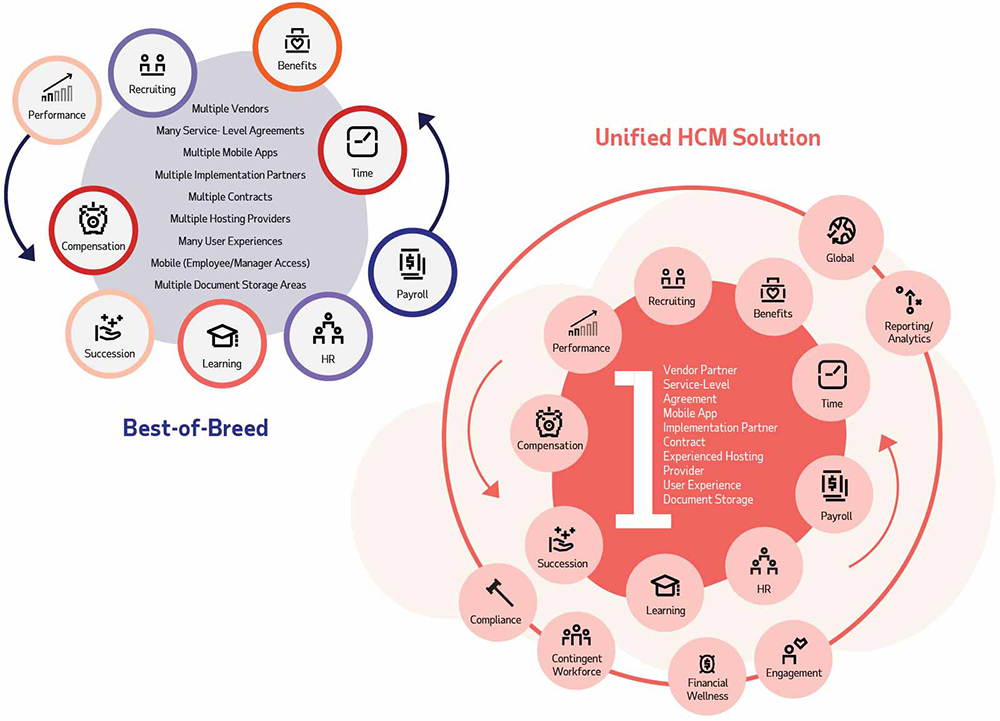
HCM software combines various HR systems to help you manage payroll and process employee data more easily, ultimately creating a smoother experience for both employers and employees.
Features and benefits of HCM software
The core features of HCM software include payroll, benefits, talent acquisition, onboarding, performance management, learning and development, and time and attendance. Most HCM solutions are flexible, so you can choose the features that best suit the needs of your business.
The benefits of automating these often time-consuming and previously disparate HR tasks are far reaching. The key benefits of HCM software include:
- Simplifying management with a single view of your workforce
- Speeding up processes by automating key tasks
- Improving productivity by enabling teams to focus on high-value tasks
- Enhancing decision-making with detailed analytics and reporting
- Savings costs with a single, centralised cloud-based system
An effective HCM solution meets all the admin needs of your HR team, including tracking travel and expenses, managing leave and absence, and supporting both recruitment and onboarding.
How to choose the right HCM tool
Choosing an HCM partner for your company can be a daunting task. However, implementing the right tool is key to unlocking HR potential.
Here are four simple steps to help you choose the right HCM solution:
- Create a checklist of your requirements, including the size of your workforce, growth expectations and your specific HR processes.
- Research options and ask vendors to demonstrate how their software solves your specific pain points identified in step 1.
- Evaluate which HCM solution best fits your needs, making sure it integrates with any existing tools and meets your data protection standards.
- Trial or test the software to make sure it suits your teams and that the vendor responds to any support requests promptly.
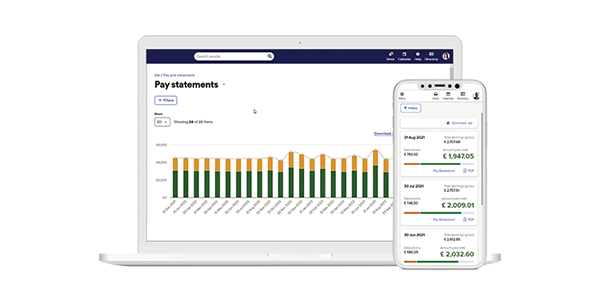
Payroll, HR and Talent, all in one place.
Discover ADP® iHCMHuman capital management best practices
Despite implementing HCM software, many companies still struggle to exploit its full potential. Here are three best practices to help your business get the most out of your HCM platform.
Create an HCM strategy
Before investing in an HCM solution, make sure to outline how you want it to help your company. Talk to your teams to find out what challenges they’re facing and how HCM software could help. Clearly define your goals and what metrics you’re going to track to determine success.
Encourage employee engagement
Ensure your HR strategy emphasises how the change will make your employees’ work easier and allows them to get involved in the rollout. Also don’t forget to celebrate any quick wins early on to help build momentum and trust.
Focus on core functions
After implementing your HCM solution, start by using the features that will provide the most value (based on your top requirements). You can always add extra functionality at a later date, but it’s best to first get familiar with the system and how it works.

Power your HCM with ADP
If you want to help your people perform at their best so they can help the company grow, human capital management is your go-to. Businesses large and small can use HCM strategies to build a more engaged, skilled and productive workforce.
HCM software not only saves your HR team time but also improves data accuracy and puts the information they need right at their fingertips. Make managing your people easier with a leading HCM solution like ADP iHCM.
FAQ
What exactly is human capital management and how is it different from HR?
HCM is about managing and developing employees for long-term business success, focusing on engagement and productivity, while HR typically handles daily administrative tasks.
How can HCM software improve payroll and time management?
It automates payroll processing and attendance tracking, reducing errors and freeing up time for strategic HR activities.
How does HCM software help with compliance?
It keeps you updated on changing regulations, automates policy alignment, and maintains audit-ready records to reduce risk.
Can HCM systems support business growth?
Yes, scalable HCM solutions adapt to increased staff and complex HR needs, making expansion smoother.
How can HCM improve employee engagement?
By tracking performance, providing personalized feedback, and simplifying HR processes to enhance the employee experience.
What is the difference between HCM, HRIS and HRMS?
HRIS is the most basic type of HR software, focusing on core employee data and admin tasks like records, payroll interfaces and compliance. HRMS builds on HRIS by adding employee lifecycle management tools like recruitment, onboarding and performance tracking. HCM is the most comprehensive, combining all HRIS/HRMS functions with strategic capabilities like workforce planning and advanced analytics for enterprise-level decision-making.
What is a human capital management framework?
A human capital management framework aims to align individual employee performance with a company’s goals. It helps ensure a business is adopting a structured approach to managing its workforce. An effective HCM framework acts as a continuous cycle with four steps:
- Plan: identify future requirements and align skills with goals
- Implement: recruit, onboard and develop employees
- Evaluate: measure performance and track KPIs (such as retention)
- Improve: use analytics to adjust strategies and refine practices
Source:
- ADP Research, People at Work 2025: A Global Workforce View.
- ADP Research, People at Work 2026: A Global Workforce View.